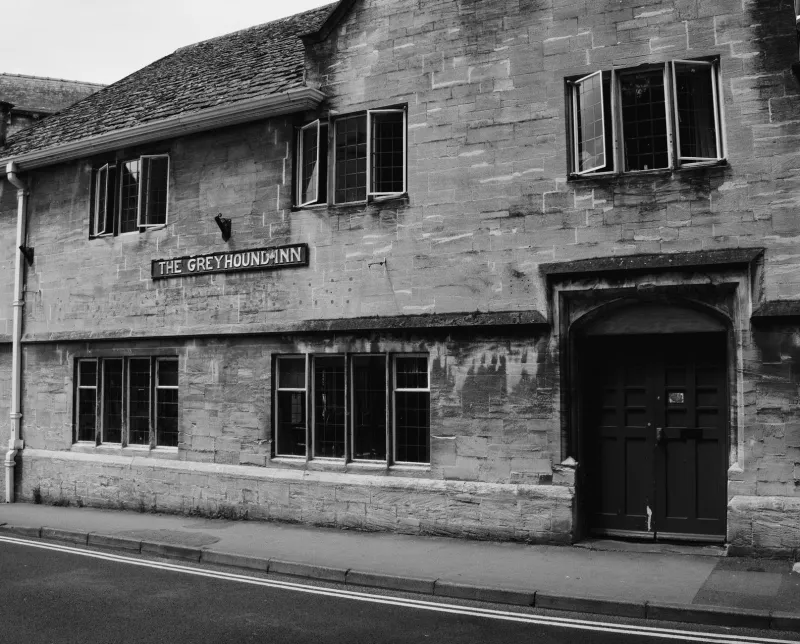
Beasts, Crests and the Stories Carved Above Withland's Inn Doors
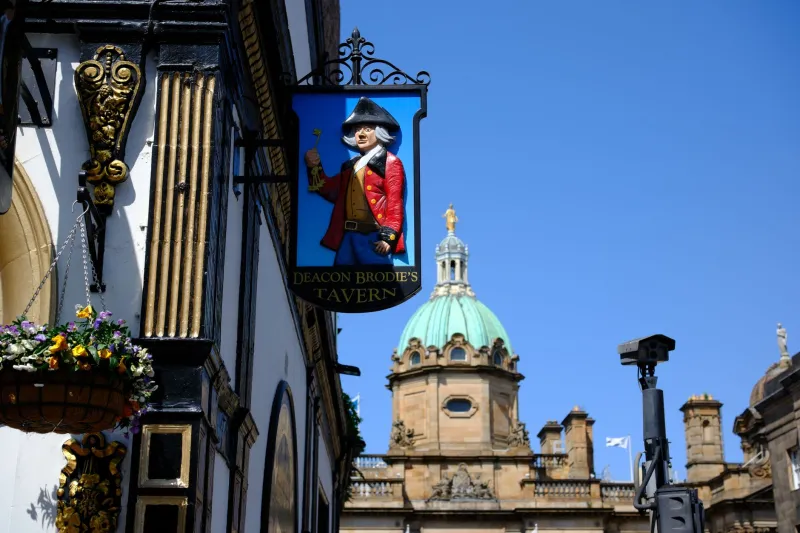
Look up the next time you approach a Withland inn. Before you reach for the door handle, before you think about whether there's parking, before you check your phone for the booking confirmation — just look up. There's a creature up there, or a crest, or a name that seems to come from somewhere very specific, and it has been speaking to travellers from that spot for longer than almost anything else in the street.
Inn names are one of Britain's most overlooked historical documents. Largely unchanged across centuries, they carry information about trade, power, local identity, and the particular character of the communities they've served. In Withland, where the inn tradition runs deep, these names reward a little attention.
Why Inns Were Named at All
The practical origins of inn naming are straightforward enough. In an era when most of the population couldn't read, a vivid image was worth considerably more than any written address. A traveller told to meet at the house with the golden eagle on its board needed no further directions. The name was the sign, the sign was the landmark, and the landmark was the social hub of the community.
But the choice of image was never arbitrary. Landlords, and the local powers who often granted inn licences, chose symbols that meant something — that communicated status, affiliation, or local significance. Over time, those choices accumulated into a kind of visual language that still speaks, if you know how to listen.
The Griffin: Power, Protection, and the Road
The griffin — part eagle, part lion, entirely magnificent — is among the most common of Withland's inn symbols, and with good reason. As a heraldic device, it combined the king of the birds with the king of the beasts, producing a creature associated with strength, vigilance, and the guarding of treasure. For an inn standing at a crossroads or on a trade route, this was exactly the right message to send.
Griffins were also closely associated with certain noble families whose influence extended across large parts of the English countryside during the medieval period. An inn bearing the griffin was often signalling its connection to that patronage — a way of saying, in effect, that this was a house of good standing, operating under the protection of significant local authority.
There's also a more pragmatic explanation for the griffin's persistence: it's an extraordinarily distinctive image. No other creature looks quite like it. In a world of painted boards swinging above doorways, a griffin was unmistakable from a distance, which made it commercially useful as well as symbolically resonant.
Stags, Horses, and the Language of the Land
Beyond the griffin, Withland's inn names reveal a broader vocabulary of creatures drawn from the landscape and the hunt. The stag — appearing as the White Hart, the Red Deer, or simply the Staghorn — was one of the most potent symbols in medieval England, associated with royalty, the forest, and the right to hunt. An inn called the White Hart was often claiming, or commemorating, a connection to the Crown, since the white stag was considered the personal quarry of kings.
Horses appear in various forms — the Black Horse, the Bay Mare, the Packhorse — and these names tend to tell a more straightforwardly practical story. Inns on droving routes, coaching roads, and market tracks named themselves for the animals that made those journeys possible. A Packhorse Inn was almost certainly situated on a route used by pack animals carrying goods between settlements, and the name served as a useful signal to merchants and traders that the stabling, fodder, and facilities they needed would be available.
The eagle, meanwhile, sits somewhere between the practical and the heraldic. Like the griffin, it was a symbol of authority and keen vision, often associated with particular families or with the imperial imagery that filtered through English heraldry from continental Europe. An Eagle and Child — one of the more intriguing compound names found across the region — carries a specific legend attached to the Stanley family, involving a foundling child discovered in an eagle's nest, which became part of their coat of arms and eventually their inn sign.
Saints, Crowns, and Civic Pride
Not all Withland inn names draw on the animal kingdom. Religious dedications — the St George, the Cross Keys, the Lamb and Flag — reflect the deep integration of church and community life in the centuries when most inns were established. The Cross Keys, in particular, is a symbol of St Peter and by extension of the papacy, suggesting inns that may have had connections to ecclesiastical establishments or that stood near church properties.
Royal names — the King's Head, the Crown, the Royal Oak — cluster around specific historical moments. The Royal Oak, found across England, commemorates Charles II's escape after the Battle of Worcester in 1651, when he famously hid in an oak tree at Boscobel. An inn adopting this name after the Restoration was making a very deliberate political statement of loyalty to the returning monarchy. In communities where that loyalty mattered enormously for trade and protection, it was a statement worth making.
What the Name Tells You Before You Go In
Spending time with Withland's inn names is a bit like learning to read a landscape that was always there but never quite legible. Once you know that a Griffin likely indicates a medieval trade route and a connection to local nobility, that a White Hart suggests royal association, that a Packhorse marks an ancient droving track — you start to see the geography of the region differently.
The roads that feel significant now were probably significant then. The inns that cluster at crossroads or bridge points are there for the same reason they always were: because that's where people needed to stop. The names remember the reasons, even when the reasons have long since been replaced by roundabouts and retail parks.
The Board That Keeps Swinging
There's something quietly moving about the persistence of these names. Fashions change, buildings are altered, landlords come and go, the community around an inn transforms beyond recognition — and yet the painted board above the door continues to show the same creature it showed five hundred years ago. The griffin keeps its watch. The stag keeps its antlers. The eagle keeps its wings spread.
For guests arriving at a Withland inn today, that continuity is part of what makes the experience feel different from checking into somewhere that was built last decade. You're not just booking a room. You're walking through a doorway that has been welcoming travellers since before anyone alive can remember, under a sign that was chosen to mean something specific to this place, this community, this piece of land.
Look up. The story starts before you even get inside.