Drawn Together: The Accidental Architecture of Withland's Most Sociable Inns

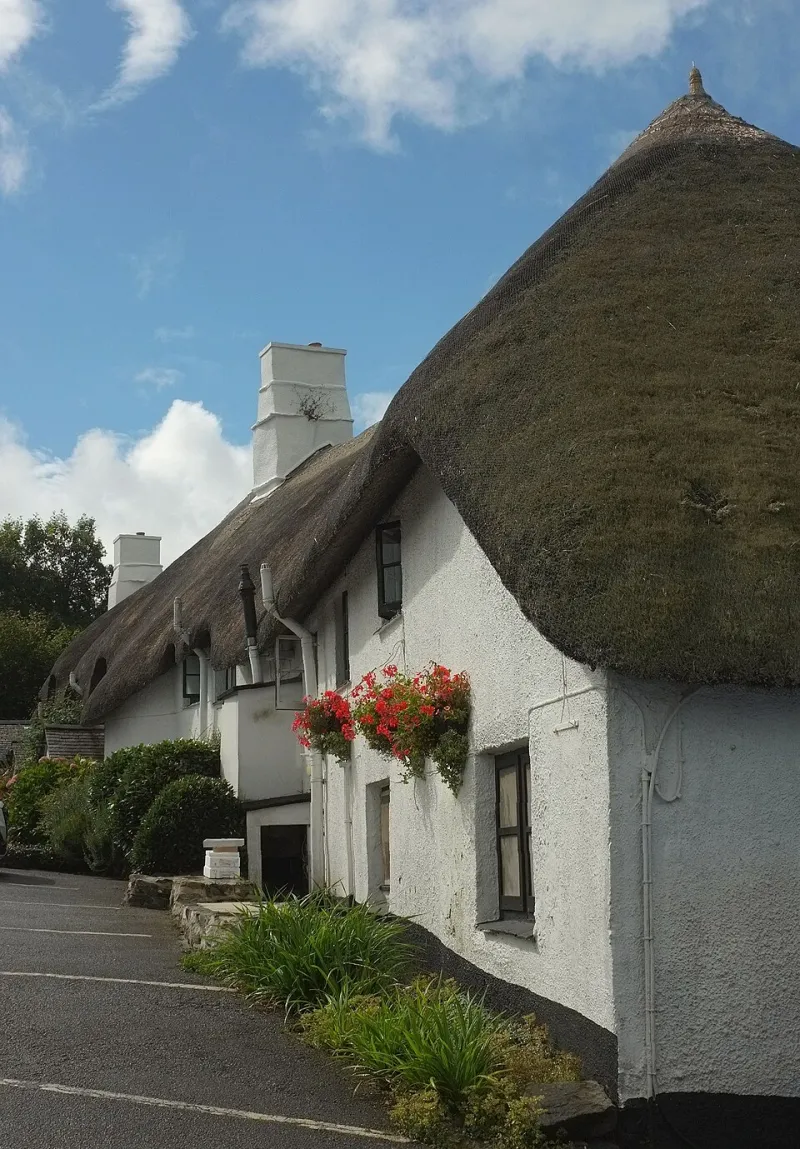
Photo: Rhododendrites, CC BY-SA 4.0, via Wikimedia Commons
You didn't plan to spend an hour talking to a retired schoolteacher from Shropshire about dry-stone walling. You came in from a long walk, sat down near the fire because it was the only seat left, and somewhere between the second pint and the arrival of your supper, a conversation simply began. By the time you went up to your room, you had a recommended walk, a book title, and the name of a cheese shop three villages over.
This is what Withland's best inns do. Not through programming or organised social events or any of the manufactured conviviality that makes modern hospitality feel slightly desperate. They do it through space. Through walls and ceilings and the placement of furniture that, in many cases, hasn't moved in decades.
The Geometry of Chance
Architects who study social behaviour in public spaces talk about something called "collision points" — the spots where people naturally pause, converge, or find themselves unexpectedly close to one another. In an airport, these are usually accidental and unwelcome. In a well-designed inn, they're the whole point.
Withland's older inns didn't have architects in the modern sense. They evolved. Rooms were added, doorways narrowed, ceilings lowered when a floor was inserted above. The result, over centuries, is a spatial logic that no contemporary designer would have had the nerve to specify on a blueprint but that works with startling consistency.
The low lintel that makes you stoop to enter the bar. The narrow corridor that requires two people to turn sideways and face each other. The single shared table beside the window that seats six strangers comfortably and eight at a push. None of these were planned as social tools. All of them function as exactly that.
The Fireplace as Social Organiser
If there's one feature that appears consistently in Withland's most sociable inns, it's the fireplace — not as decoration, but as anchor. A lit fire creates what spatial designers call a "focal point," and focal points do something quietly powerful: they give people somewhere to look that isn't each other, which paradoxically makes it easier to talk.
The arrangement matters enormously. An inglenook that pulls seating into a rough semicircle creates intimacy without pressure. A fire set into a wall with armchairs angled toward it — never quite facing each other, never quite facing away — creates the conditions for conversation to develop at its own pace. You're not obliged to speak. But you're not isolated either.
Several of Withland's most beloved inn sitting rooms have fireplaces that date back several hundred years. The seating around them has been replaced many times. But the fundamental geometry — the radius of warmth, the angle of approach, the depth of the hearth — hasn't changed, because it works.
The Sunken Lounge Effect
A handful of Withland's inns have what might charitably be called architectural quirks: rooms that sit a step or two below the main floor level, reached by a short descent that immediately separates them from the bustle of the corridor or bar beyond.
These sunken spaces — often the result of an old flagstone floor settling unevenly over centuries, or a doorway cut through at an awkward height during some long-forgotten renovation — have an effect that's hard to quantify but easy to feel. You step down into them and something shifts. The noise of the rest of the building recedes slightly. The ceiling feels closer. The room becomes, in some instinctive sense, yours.
And when a space feels like it belongs to the people in it, those people tend to stay longer, talk more, and leave their phones in their pockets.
Open Kitchens and the Alchemy of Visibility
Not every social space in a Withland inn is a lounge or a bar. Several of the area's most characterful lodges have, through necessity or philosophy, kitchens that are at least partially visible from the dining room — a hatch, a pass-through, an open archway that wasn't always there.
The effect is disproportionate to the aperture. When guests can see the kitchen — even a glimpse of movement, a flash of copper pan, a cook's arm reaching across — the meal becomes a different kind of experience. There's a shared understanding that something real is happening. The food arrives with a context it wouldn't otherwise have.
And visible kitchens invite questions. What's that? Is that the fish from the board? Guests who might never speak to a member of staff beyond ordering and paying find themselves leaning forward, curious, engaged. The kitchen becomes a conversation starter from fifteen feet away.
The Shared Table, Revisited
One of the more quietly radical decisions an inn can make is to include a large shared table in the dining room — not as the only option, but as an option. Several Withland establishments have done exactly this, often drawing on the tradition of the long refectory table that would have been the centre of inn life in earlier centuries.
The shared table is not to everyone's taste, and the inns that do it well are careful not to impose it. But for solo travellers, for couples who've been talking to each other all day and fancy something different, for anyone who arrives at dinner slightly tired of their own company, the shared table is a gift.
What's remarkable is how often these tables generate the most memorable conversations of an entire trip. The schoolteacher from Shropshire. The retired engineer who cycles everywhere. The couple who moved from London five years ago and haven't looked back. These encounters happen because the table made them possible — because someone, at some point, decided not to fill the room with tables for two.
Why It Can't Be Manufactured
Modern hospitality design spends considerable energy trying to recreate these conditions. Boutique hotels commission bespoke furniture arrangements. Urban bars hire spatial consultants. The results are often handsome and occasionally clever, but they rarely produce the same effect.
The reason, most Withland innkeepers will tell you, is that genuine sociability can't be designed into a space from scratch. It has to accumulate. It needs the patina of use, the slight imperfection of a room that's been lived in for a long time, the sense that the people who sat here before you left something behind.
What the best inns in Withland offer, perhaps above everything else, is a space that has already been broken in — and is still, somehow, breaking people open.