Three Generations, One Table: Why Withland's Inns Are the Family Holiday Nobody Expected
Three Generations, One Table: Why Withland's Inns Are the Family Holiday Nobody Expected
The multigenerational family holiday has a reputation problem. Ask anyone who's attempted one and you'll hear the same litany: the grandparents exhausted by noise and activity, the children bored by anything that doesn't involve a screen or a waterslide, the parents trapped somewhere in the middle trying to mediate between two entirely different ideas of what a good time looks like.
And yet, quietly and without much fanfare, something is shifting. Families who've tried Withland's traditional inns for a shared stay are coming back — sometimes the following year, sometimes a few months later — and they're bringing more people with them. What's happening here isn't complicated, but it is genuinely interesting.
The Pace That Pleases Everyone
The first thing that strikes most families arriving at a Withland inn is the tempo of the place. It's not slow in a dull way — there's warmth and activity and the particular low hum of a well-run house — but it's unhurried in a manner that immediately removes a specific kind of pressure that modern family holidays tend to generate.
There is no timetable to keep. No wristband to activate. No queue for the breakfast buffet that opens at a specific time and closes at another. Meals happen when the family is ready; walks begin when boots are on and not a moment before. For grandparents who find relentless scheduling exhausting, this is an immediate and profound relief. For children, the absence of rigid structure often produces something unexpected: genuine creativity, the kind that emerges when a morning isn't already pre-packaged.
Parents, meanwhile, find that they stop performing the role of holiday logistics coordinator and can simply be present. That shift — from manager to participant — is one the best Withland innkeepers understand intuitively and quietly engineer through the way their houses are run.
Interconnecting Rooms and the Architecture of Togetherness
Practical matters are not trivial. One of the persistent failures of multigenerational holiday accommodation is that it forces families into configurations that don't work — either everyone crammed into a single space with no privacy, or scattered across separate units that make spontaneous togetherness logistically difficult.
Withland's older inns, built at a time when extended family travel was the norm rather than the exception, often have room configurations that suit multigenerational groups surprisingly well. Interconnecting rooms, separate but adjacent, allow grandparents to have their own quiet space while remaining genuinely close. Children can move between rooms without the family fragmenting. There's a shared sitting room, a communal dining table, a garden that belongs to everyone.
This architecture of togetherness — the inn designed around collective life rather than individual transactions — turns out to be exactly what families travelling across generations actually need. The building was made for this. It just took a few generations of package holidays to make us forget.
Storytelling at the Centre of Things
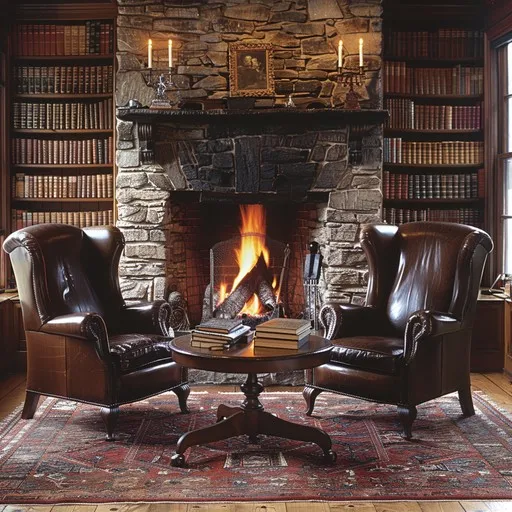
One of the underappreciated gifts of a traditional inn stay is the quality of conversation it tends to generate. There's something about a fireside, a proper meal and the gentle absence of competing entertainment that coaxes people into actual talk — and in a multigenerational group, this can produce something quite remarkable.
Grandparents who might struggle to connect with grandchildren over a shared interest in contemporary culture find that the inn setting creates natural conversational bridges. The old photograph on the wall prompts a memory. The dish on the menu triggers a story about how things used to be done. The innkeeper mentions a local landmark and suddenly a grandparent is telling a story that the grandchildren have never heard, because the right prompt never arose before.
Inns have always been places where stories are exchanged. That function hasn't changed — it's just that now, in a multigenerational group, the stories crossing the table span seven or eight decades. That's not a small thing. For many families, a Withland inn stay becomes, unexpectedly, an occasion for oral history — a chance for younger generations to understand something about where they come from in a way that no family gathering at home quite achieves.
The Communal Table as Common Ground
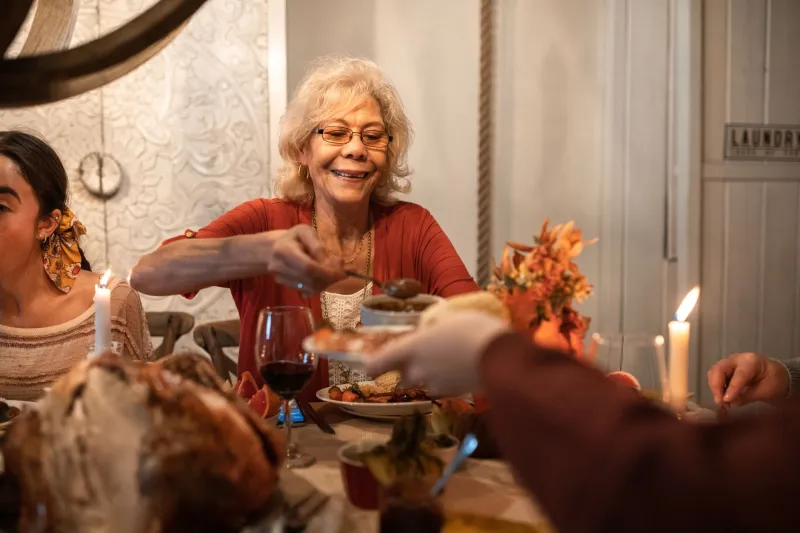
Food is, as it has always been, the great equaliser. And the communal dining experience at a Withland inn — where the menu reflects local produce, seasonal rhythms and genuine cooking skill rather than the lowest common denominator of a chain restaurant's children's menu — creates a shared experience that families often describe as the highlight of their stay.
Grandparents recognise the cooking. It speaks to something in their experience of food before convenience took over — proper stocks, unhurried preparation, vegetables that taste like themselves. Children, often more adventurous than their parents expect when the atmosphere is relaxed and the presentation is honest rather than gimmicky, frequently discover dishes they didn't know they liked. Parents sit in the middle, slightly astonished, watching their family eat the same meal with equal enthusiasm.
The inn breakfast deserves particular mention. A long, unrushed Withland breakfast — local eggs, proper bacon, toast made from bread that was baked yesterday — is a genuinely democratic pleasure. It requires nothing of anyone except the willingness to sit down and eat well, and it has a reliable talent for putting three generations in an excellent mood before the day has properly begun.
What Theme Parks Cannot Do
The comparison with theme parks and holiday parks is not meant unkindly — those places serve a genuine purpose and do it well. But they are built around stimulation, and stimulation is generationally divisive. What thrills a nine-year-old is exhausting for a seventy-year-old. What satisfies a grandparent — a quiet bench, a long view, a cup of tea that arrives without being asked for — bores a child within minutes.
The inn doesn't try to please everyone through stimulation. It pleases everyone through comfort, through rhythm, through the quality of simple things done properly. That's a harder trick to pull off than building a rollercoaster, and it's one that Withland's innkeepers have been practising for a very long time.
Booking It Right
For families considering a multigenerational Withland stay, a few practical thoughts. Ring ahead — always ring ahead. Explain the composition of your group and ask about room adjacency. A good innkeeper will think carefully about where to place you and will often have suggestions that don't appear on any booking page. Ask about mealtimes and flexibility; most Withland inns are more accommodating than their posted hours suggest, particularly for families with young children or grandparents who keep earlier hours.
And consider a midweek stay if schedules allow. The inn at midweek has a particular quality — quieter, more attentive, the innkeeper with more time to talk — that suits multigenerational groups especially well.
The family holiday that works for everyone isn't a myth. It's just been hiding in plain sight, behind a painted sign on a Withland lane, waiting for you to walk through the door.