The Hour After Dinner: Why the Best Conversations in Withland Happen in the Lamplight

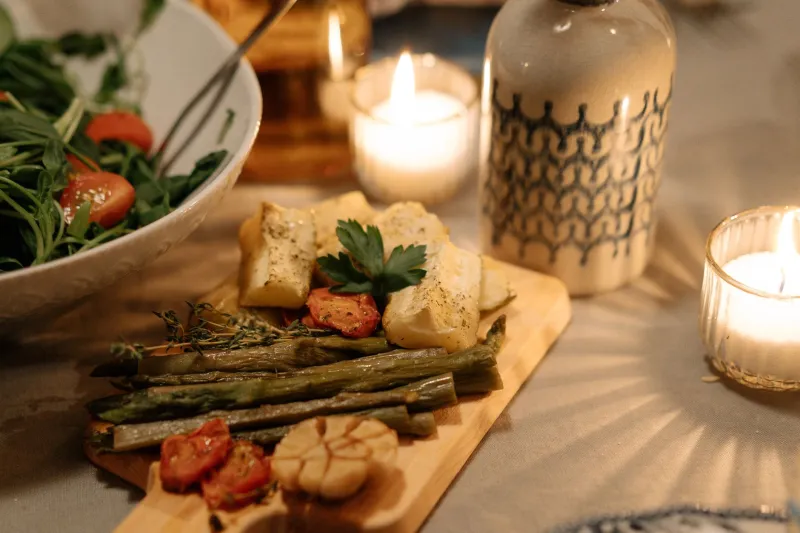
Photo by Photo by Joshua Gaunt on Unsplash on Unsplash
It starts, usually, with someone reaching for the same bottle at the same moment. Or a comment about the weather that comes in through the door with the last arrivals. Or simply the fact that two tables are close enough, in a room lit warmly enough, that not speaking would feel like the stranger choice.
The post-dinner gathering — informal, unscripted, occasionally revelatory — is one of the quieter pleasures that Withland's inns do particularly well. It's not something you'll find advertised on a website or listed in the amenities. It happens, or it doesn't, depending on a dozen small decisions that the best innkeepers have been refining for years.
What's Been Lost and Why It Matters
The evening social, in its traditional British form, has taken a battering in recent decades. The proliferation of screens has given everyone a perfectly reasonable excuse to retreat into their own world the moment the meal ends. Hotel bars designed for efficiency rather than lingering offer little incentive to stay. And the particular social awkwardness of initiating conversation with strangers — never entirely absent from British culture — has, if anything, intensified in an era when doing so feels almost transgressive.
And yet the appetite for genuine human exchange hasn't disappeared. It's just been poorly served. Talk to guests who've experienced an unexpectedly good evening at a Withland inn — the kind that ends at midnight when everyone thought they'd be in bed by ten — and the emotion they describe is something close to relief. Relief that it's still possible. Relief that they're still capable of it.
"People arrive tired and a bit defended," observes one innkeeper who runs a small, deeply characterful establishment that has become something of a gathering point for regulars and newcomers alike. "By the end of the evening, something's loosened. They leave different. That's what we're going for."
The Architecture of Conversation
The physical environment matters enormously, and the inns that get this right have usually thought about it more carefully than they let on. Lighting is perhaps the single most important variable. The harsh overhead illumination that plagues so many British pubs is antithetical to the kind of ease that good conversation requires. Withland's better inn bars and sitting rooms tend to work with pools of warm, low light — table lamps, candles, the unpredictable glow of an open fire — that create an implicit permission to relax.
Seating arrangements are equally deliberate. The key is to avoid both extremes: rooms where tables are so isolated that interaction feels impossible, and rooms so open that every conversation becomes public. The sweet spot involves clusters of seating that feel intimate but not sealed off — a couple of armchairs angled slightly toward the bar, a window seat that faces into the room rather than away from it, a long table near the fire where solo guests and couples naturally end up in proximity.
"It sounds manipulative when you describe it," admits one host, laughing slightly. "But all you're really doing is removing the obstacles. The conversation happens on its own if you've set things up properly."
The Drinks Menu as Social Infrastructure
A thoughtfully constructed drinks menu does more work than most guests realise. At the inns where evening socialising flourishes, the list tends to be curated rather than comprehensive — a selection that invites curiosity and comment rather than overwhelming with options. Local ales with interesting provenance, a short wine list with genuine personality, and increasingly, a considered selection of non-alcoholic options that don't feel like an afterthought.
The ritual of choosing a drink, discussing it with the person behind the bar, and perhaps being offered a small taste before committing is itself a social act — a gentle on-ramp to the kind of easy exchange that might eventually draw in the couple at the next table. Innkeepers who understand this make themselves available for these conversations without hovering or performing. There's a difference between a host who is genuinely interested in what you think of the local perry and one who's going through the motions.
Several inns in Withland have also introduced the quiet innovation of a shared nightcap — a small something that arrives unrequested around nine o'clock, offered to everyone in the room. A thimble of sloe gin. A small glass of something local and unusual. It's a gesture that costs little but accomplishes a great deal: it gives everyone in the room a shared experience, a common point of reference, and an easy opening.
The Innkeeper as Social Catalyst
The host's role in all of this is subtle but essential. The best Withland innkeepers have a particular talent for what might be called social geography — an instinct for who in the room might enjoy talking to whom, and how to engineer the introduction without anyone noticing that's what's happened.
It might be as simple as mentioning, while refilling a glass, that the man by the fire walked the same route this morning that the couple by the window are planning for tomorrow. Or noting, apparently in passing, that two guests at separate tables have both ordered the same unusual digestif and perhaps have similar taste. These small interventions are rarely acknowledged, but they work.
"You can't force it," says one innkeeper firmly. "The moment it feels like organised fun, it's over. You're just creating conditions and then getting out of the way."
What Actually Gets Talked About
The conversations that happen in these rooms range from the trivial to the surprisingly profound, often within the same evening. Route recommendations and walking conditions. The provenance of the cheese board. Someone's career change, offered up with an openness that surprises even the person speaking. A shared memory of a place none of them have been to together. The particular pleasure of talking to someone you'll probably never see again, which creates its own kind of honesty.
Withland draws a particular kind of traveller — people who've chosen the slower road, who've opted for an inn over an anonymous hotel, who are, by self-selection, at least somewhat open to what the evening might bring. This helps. But it's not sufficient on its own. The environment has to meet them halfway.
The inns that do this well have understood something that the broader hospitality industry keeps forgetting: people don't just want to be fed and housed. They want to feel, at least occasionally, that they belong somewhere. Even if only for one evening, in a room they've never been in before, talking to people whose names they may not catch.
That feeling, when it happens, is worth more than any amenity on a booking website. And in Withland, it happens more often than you might expect.