After Nine O'Clock: The Late-Night Kitchen Revival Changing How Withland Eats
After Nine O'Clock: The Late-Night Kitchen Revival Changing How Withland Eats
The British supper has been quietly missing for decades. Not dinner — dinner never went anywhere. Not bar snacks, which have colonised the late-evening hours with crisps and reheated chips. The supper: that distinct, unhurried, informal meal taken late in the evening, built from the best of what the larder holds and eaten without ceremony at a table that still has the warmth of the day's conversation in it.
It is a different thing entirely from its more formal neighbours in the daily meal schedule, and Withland's most perceptive innkeepers know it. A growing number of them are reviving it — not as a gimmick or a menu extension, but as a genuine expression of what their kitchens are actually capable of once the pressure of the main service has lifted and the evening has found its natural, slower rhythm.
A Brief History of the British Supper
The supper has deep roots in British domestic life, though you wouldn't know it from the contemporary hospitality landscape. In the eighteenth and nineteenth centuries, supper was a distinct institution — lighter than dinner, taken late, and carrying a specifically social character that set it apart from the formal rituals of the main evening meal. Coaching inns knew it well. Travellers arriving after dark required sustenance that wasn't quite a full dinner but was considerably more serious than a biscuit, and the inn kitchens of England developed a repertoire to match: cold cuts and pickles, potted meats, good bread, a wedge of proper cheese, and whatever the season had most generously provided.
Somewhere in the twentieth century, the supper got squeezed out. Restaurant culture pushed dining earlier. The pub's evening offering consolidated around the standard kitchen-closes-at-nine model. The late-evening meal, informal and ingredient-led, lost its institutional home.
Withland's innkeepers are giving it one back.
What a Withland Supper Actually Looks Like
Ask an innkeeper to describe their supper offering and you'll get as many different answers as there are inns, which is rather the point. This is not a standardised product. It is, almost by definition, the opposite — a meal shaped by what's in the kitchen that evening, what the local suppliers delivered that week, and what the season is currently insisting upon.
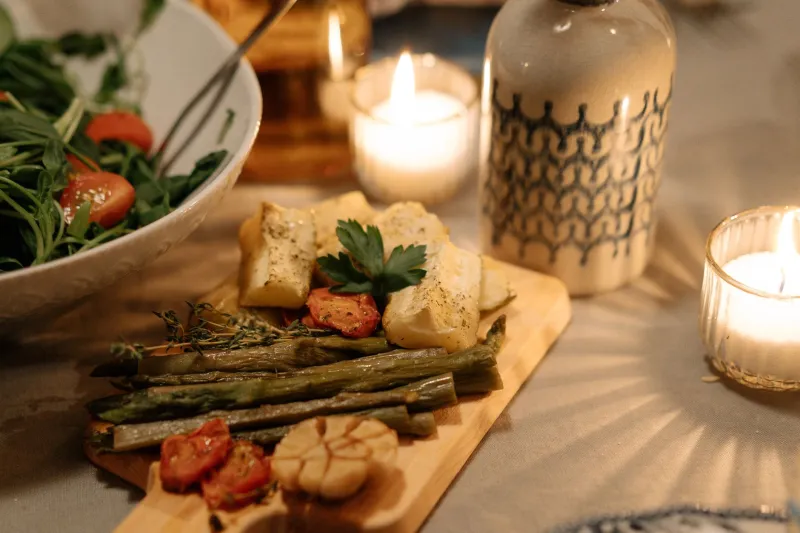
In practice, this might mean a board of locally cured meats alongside a sharp, crumbling territorial cheese and a chutney made from the kitchen garden's surplus. It might be a bowl of something slow-cooked — a broth, a potted thing, a rarebit of serious ambition — accompanied by bread that was baked that morning and is now at the precise stage of its life where it's best eaten rather than saved. It might be cold roast from the day's joint, sliced thick and served with good mustard and nothing else by way of apology.
"The supper is what we'd eat ourselves," explains one Withland innkeeper who introduced a late offering three years ago after guests kept lingering hopefully in the bar past nine. "It's not a reduced menu or an afterthought. It's actually the most honest thing we do. The pressure's off, the kitchen's calm, and we're cooking what we'd want to eat at that hour."
That honesty — the absence of performance, the sense of being fed rather than being served at — is the quality that distinguishes the supper from everything else on the Withland food calendar.
The Larder at the Heart of It
The revival of the late supper is inseparable from the broader movement among Withland's innkeepers towards genuinely local sourcing. A supper built from what the larder holds only works if the larder holds something worth building from — and increasingly, Withland's inn kitchens are stocked with the kind of regional produce that makes improvisation not just possible but genuinely exciting.
Local dairies supply cheeses that change character with the season. Nearby farms provide cured meats, air-dried and properly aged rather than factory-processed. Kitchen gardens — a feature of more Withland properties than you might expect — contribute pickles, preserves, and occasional vegetables of the kind that taste unmistakably of where they were grown. The surrounding hedgerows, for those innkeepers who know how to read them, add a further dimension: sloe vinegar, crab apple jelly, the occasional foraged mushroom dried and waiting for the right moment.
This is the larder tradition at its most practical and most compelling. The supper is where it reveals itself most directly, because the late hour and the informal register strip away everything that isn't genuinely necessary and leave only what's actually good.
The Conversation That Happens After Nine
There is a social dimension to the Withland supper that its proponents describe with consistent enthusiasm and that is genuinely difficult to manufacture in any other context. The late hour, the informality, the sense that the working day has properly ended — these conditions produce a particular quality of conversation.
"People talk differently at supper," observes one innkeeper whose late kitchen has developed a devoted following among regulars. "At dinner there's still a bit of performance — people are aware of the room, the other tables, the occasion. By nine o'clock that's gone. It's just people eating good food and talking properly."
Guests confirm this. Couples who've been travelling together all day and haven't quite managed to connect over dinner find themselves talking at supper in a way that feels different — slower, more honest, less structured. Solo travellers, who can sometimes feel conspicuous at the main evening service, discover that the informal supper context dissolves the self-consciousness entirely. A late plate of food and a decent glass of something is a remarkably effective social leveller.
Why This Matters Beyond the Plate
The revival of the British supper in Withland's inns is about more than food. It is about a particular understanding of what an inn is actually for: not just accommodation and a meal, but a genuine place of rest and restoration where the rhythms of the day can properly wind down.
The late kitchen — warm, unhurried, stocked with good things — is an expression of that understanding. It says: you don't have to be finished by eight. You can arrive cold from an evening walk and find something worth eating. You can linger at the bar until the mood takes you and then sit down to a plate of something honest and local without ceremony or apology.
This is the inn at its most generous. And in Withland, at least, the kitchen light is still on.
The supper, it turns out, never really left. It was just waiting for innkeepers brave enough to serve it.