Guardian at the Gate: The Remarkable Story of Britain's Most Enduring Inn Symbol
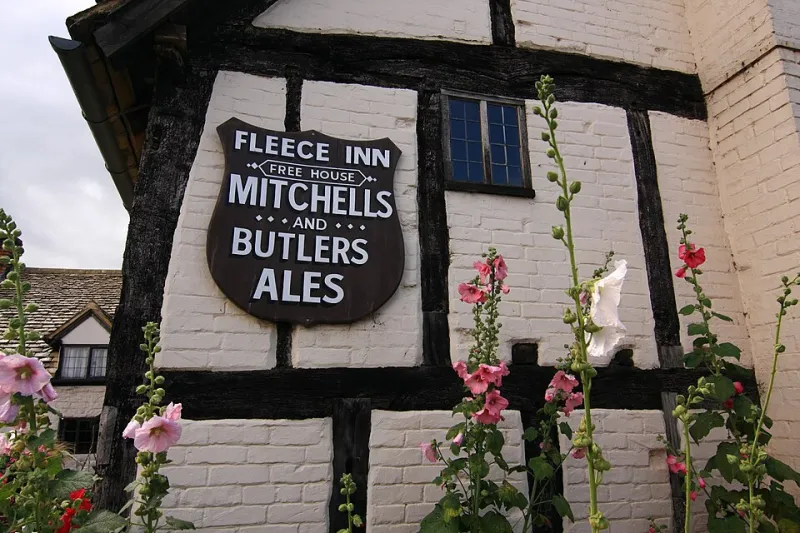
Photo: IDS.photos from Tiverton, UK, CC BY-SA 2.0, via Wikimedia Commons
Guardian at the Gate: The Remarkable Story of Britain's Most Enduring Inn Symbol
Look up. If you're standing outside a traditional Withland inn, there's a reasonable chance that somewhere above the entrance — on a painted board, a carved stone corbel, or a wrought iron bracket — a griffin is watching you. It has been watching travellers like you for the better part of a thousand years. It would like you to know that you are safe here.
This is not a small claim for a piece of painted wood to make. But then, the griffin has never been a modest symbol.
A Creature of Impossible Credentials
The griffin — sometimes spelled gryphon, occasionally griffon, always magnificent — is one of the most ancient composite beasts in Western heraldic tradition. Its body is that of a lion, the undisputed king of the terrestrial world. Its head, wings and forelegs belong to an eagle, the unchallenged sovereign of the skies. The combination was not accidental. Medieval heraldists were precise people, and the griffin was constructed with deliberate care to embody mastery over both earth and air — strength and vision, power and perspective.
In the bestiaries that circulated through monastic libraries across medieval Europe, the griffin was described as fiercely protective of its territory and its young. It was said to mate for life. It was credited with the ability to detect poison — a griffin's claw, ground down and dissolved in water, was believed to change colour in the presence of venom. Whether or not medieval travellers genuinely believed this is perhaps less important than what it tells us about the symbolic function the creature served: a griffin was a guarantor of safety. To travel under its protection was to travel with confidence.
For an inn — a place whose entire purpose is to receive strangers and make them feel secure — there is no more fitting mascot in the whole of heraldic tradition.
From Coat of Arms to Coaching Inn
The journey from medieval manuscript illustration to painted inn sign is a long one, and it passes through some of the most consequential chapters in British social history.
The great noble families of medieval England adopted the griffin into their heraldry with enthusiasm. The Plantagenets used it. The Mowbrays used it. Edward III incorporated it into royal iconography. When these families built or patronised inns along the coaching routes of England — and many did, as the movement of people and goods was both a political and commercial concern — their heraldic symbols came with them. An inn operating under the protection or patronage of a griffin-bearing family would naturally display that symbol. It was both advertisement and reassurance: this house is known, connected, trustworthy.
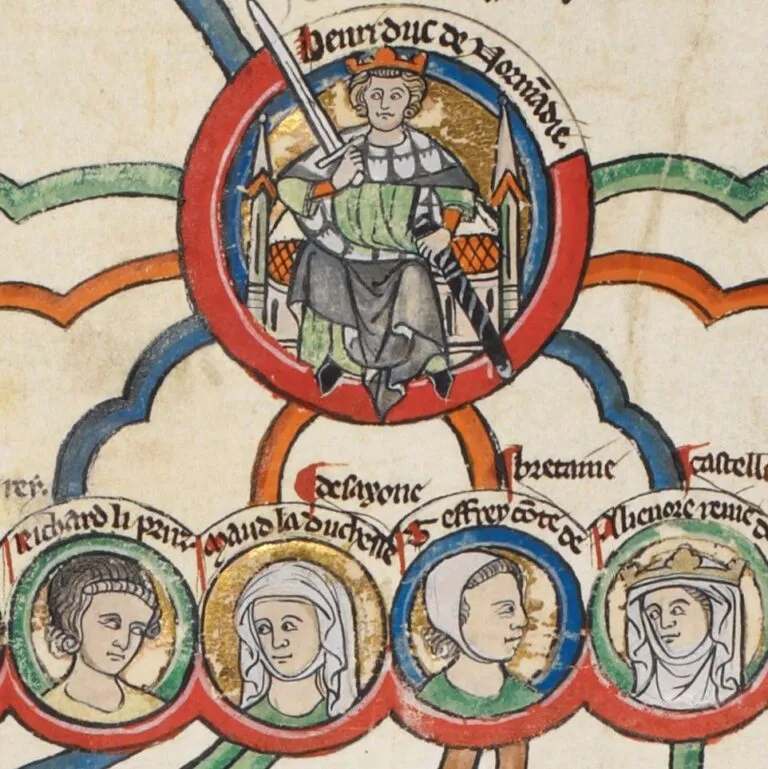 Photo: Plantagenets, via medievalbritain.com
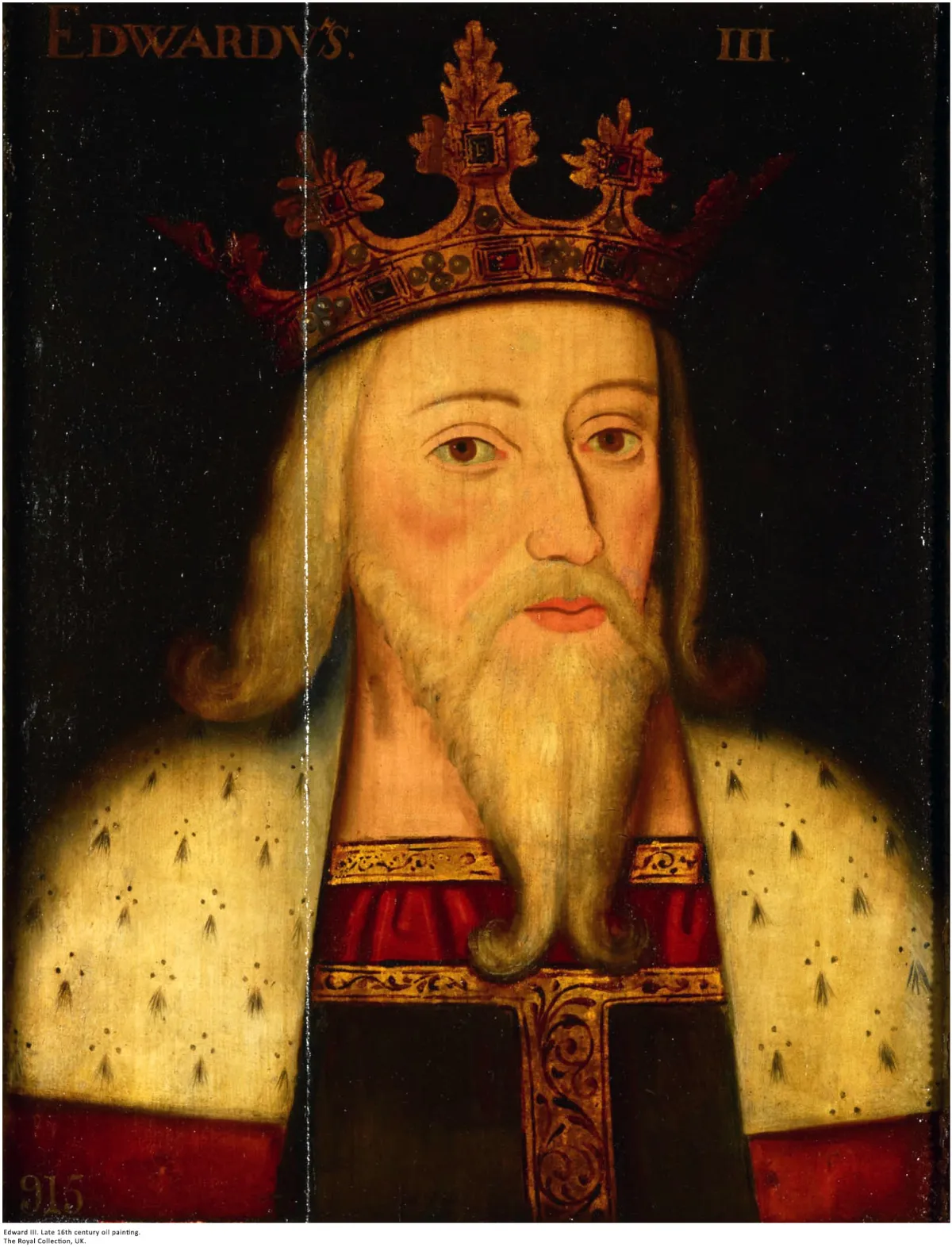 Photo: Edward III, via www.luminarium.org
As the coaching network expanded during the seventeenth and eighteenth centuries, inn signs became an increasingly important form of public communication in a largely pre-literate landscape. The sign above the door told travellers arriving after dark, in unfamiliar territory, exactly what kind of establishment they were entering. A griffin said something specific: this is a house of substance. This is a house with history. This is a house that takes its obligations to the traveller seriously.
The Sign Painter's Art
The painted inn sign is one of the most underappreciated art forms in British cultural history. At its peak, the trade supported skilled painters who moved between commissions, developing a distinctive visual language that balanced heraldic accuracy with the practical demands of a board that needed to be readable from a moving carriage at dusk.
Griffins presented particular challenges. The creature's composite nature — the precise point at which feather becomes fur, the articulation of the taloned forelegs, the expression on that fierce, proud face — required both technical skill and interpretive confidence. No two griffin signs are quite alike, and this variation is part of their charm. Some are fierce and angular, clearly descended from formal heraldic tradition. Others are almost friendly, the eagle's eye softened, the lion's body relaxed into something approaching a resting posture. The best ones manage to be simultaneously welcoming and formidable — which is, when you think about it, precisely what a good innkeeper should be.
The tradition of hand-painted inn signs is not entirely lost. A small number of specialist painters continue to work in this tradition across England, and several Withland establishments have invested in new signs made by craftspeople who treat the commission with the seriousness it deserves. To watch a griffin emerge from a prepared board under a skilled painter's hand is to witness a direct continuation of a practice that has been happening in England for centuries.
Why Withland Wears the Griffin Well
There are griffin inns across Britain — from the industrial Midlands to the Scottish borders, from market towns in East Anglia to harbour villages in the West Country. The sign is genuinely ubiquitous. So what makes Withland's relationship with the symbol feel different?
Part of the answer is topographical. Withland sits within a landscape that has always rewarded the traveller who arrives with the right attitude — curious, unhurried, prepared to look carefully at things. This is not a place that announces itself loudly. Its pleasures are earned through attention, and its inns reflect that character. A griffin above a Withland door is not merely a historical accident or a branding exercise. It feels, in this particular landscape, like a genuine statement of intent.
But there's more to it than geography. The inns of Withland have maintained, with varying degrees of self-consciousness, a tradition of hospitality that takes the traveller's welfare seriously in a way that goes beyond commercial transaction. The warmth is real. The local knowledge is genuine. The welcome at the door has substance behind it. These are the qualities the griffin has always symbolised, and they're qualities that Withland's best inn-keeping families have been quietly demonstrating for generations.
The Promise Above the Door
Heraldry, at its most fundamental, is a language of promises. A coat of arms is a statement of identity and obligation — this is who I am, this is what I stand for, this is what you can expect from me. When a medieval lord placed a griffin on his banner, he was making a claim about his character: strength, protection, vigilance, fidelity.
When that symbol migrated to the inn sign, the promise migrated with it. A griffin above the door is not decoration. It is a commitment, made in paint and timber, to every traveller who passes beneath it. You will be received here. You will be safe here. The standards of this house will not disappoint you.
Next time you arrive at a Withland inn and find a griffin watching you from above the entrance, take a moment to look back at it properly. Consider what it has seen: the coaches and the packhorses, the drovers and the pilgrims, the commercial travellers and the honeymooners, the walkers with muddy boots and the families with too much luggage. Centuries of arrivals, each one welcomed beneath the same fierce, patient gaze.
Then walk through the door. The griffin has been expecting you.