Swapping the Commute for the Cellar: Why British Couples Are Choosing Innkeeping Over Everything Else
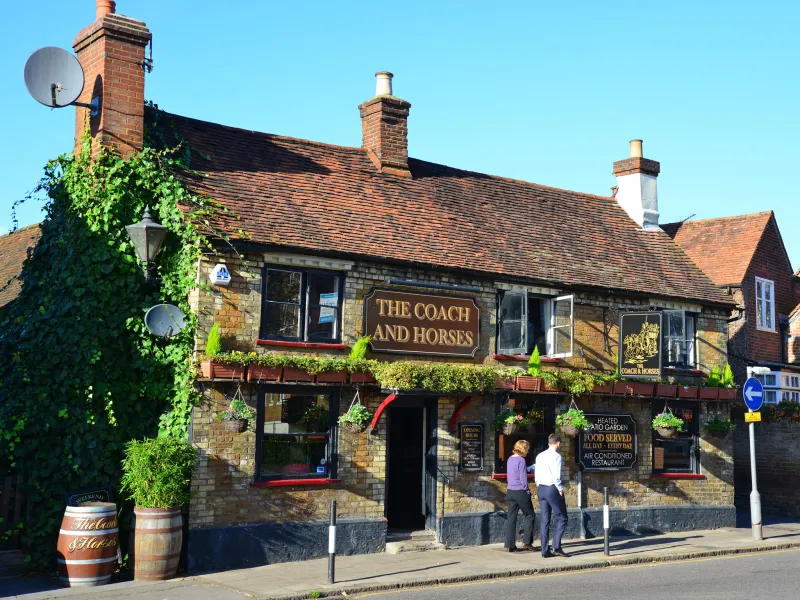
Photo: couple running traditional British country pub inn bar, via media.timeout.com
Picture two people, somewhere in their late thirties or early forties, standing in the car park of a Withland inn on a quiet Tuesday in November. The leaves are down. The pub sign is creaking in a light wind. One of them turns to the other and says something like, "We could actually do this, couldn't we?"
It's a moment that's playing out with increasing frequency across the Withland area — and beyond. British couples, many of them professionally successful, many of them exhausted, are walking away from parallel careers and separate schedules to take on something altogether more demanding, more intimate, and, by most accounts, far more rewarding.
They are becoming innkeepers. Together. On purpose.
The Life They Left Behind
The stories tend to follow a familiar shape. Two careers, two sets of office politics, two phones that never quite switch off. A relationship conducted largely at the margins of the working week — the hurried Sunday evening meal, the holiday that somehow still felt like work, the slow accumulation of weekends that slipped past without anything much to show for them.
For many of the couples now running inns in and around Withland, the decision to change course wasn't triggered by a single dramatic event. It crept up on them. A weekend away at a well-run country inn — the kind where the host clearly loves what they do and the food tastes like someone actually cared — planted a seed that took a year or two to properly germinate.
"We kept coming back to the same thought," one innkeeper told us, pulling a pint with the easy efficiency of someone who has done it ten thousand times. "We were both working incredibly hard, but we were working for other people's visions. Here, everything we put in, we see the result of directly. That's not nothing."
What Innkeeping Actually Looks Like
Let's be honest: it isn't all roaring fires and appreciative guests. The romanticism of the rural inn life takes a fairly swift battering once the alarm goes off at six on a wet February morning and the boiler has decided to have an opinion about it.
The division of labour in a couple-run inn tends to find its own logic fairly quickly. One partner gravitates towards the kitchen and the suppliers; the other towards the bar, the bookings, and the front-of-house rhythm. Some couples find the overlap energising. Others learn, fairly quickly, the importance of having clearly defined territories and the occasional evening off from each other's company.
"The hardest thing isn't the work," says one Withland innkeeper who, with her husband, took over a seventeenth-century coaching inn three years ago after careers in finance and architecture respectively. "The hardest thing is that you're never really off. Your home is your workplace. Your workplace is your home. You have to build the boundaries yourself, because nobody else is going to build them for you."
And yet — almost universally — the couples we spoke to described the transition not as a sacrifice but as a recalibration. A return to something more legible.
The Unexpected Rewards
There's a particular satisfaction, it turns out, in a job where the feedback is immediate and human. A guest who comes down to breakfast glowing after the best night's sleep they've had in months. A couple celebrating an anniversary who tell you, slightly tearfully, that the dinner was the finest they'd eaten in years. A solo walker who arrived looking hollowed out and leaves looking restored.
For couples who spent years in industries where impact was measured in spreadsheets and quarterly reviews, this directness is, by several accounts, quietly transformative.
There's also the community dimension — something that catches many incomers off guard. A Withland inn isn't just an accommodation business. It's a village institution. The regulars at the bar on a Thursday night, the local farmer who supplies the eggs, the walking group that has used the same corner table for twenty years — these relationships accumulate into something that feels, over time, remarkably like belonging.
"We didn't move here to become part of the community," admits one innkeeper who arrived from London with his partner four years ago. "We moved here to run a business. But the community came with it, and honestly, that's been the biggest surprise. We know our neighbours. We know their names, their dogs, their children. We didn't have that before."
What It Reveals About Britain Right Now
The trend — and it does feel like a trend, not just a handful of individual decisions — says something interesting about where a certain generation of British professionals currently finds itself. The relentless forward momentum that defined the careers of many people now in their late thirties and forties has started to feel, for some, less like progress and more like acceleration for its own sake.
Innkeeping offers something different. It is, paradoxically, far harder work than most of the jobs people leave to pursue it. But it is work that has shape, texture, and a direct relationship with the people it serves. It is also, crucially, work that a couple can do together — not alongside each other, in parallel, but genuinely together, building something shared.
In a culture that has spent decades celebrating individual achievement, there's something quietly radical about that.
The Kingdom Behind the Bar
The title of this piece refers to a phrase we heard more than once during our conversations with Withland's newer innkeeping couples. Two keys, one kingdom — the idea that what they've created, for all its complexity and exhaustion and occasional chaos, belongs to both of them equally.
That's rarer than it sounds. And in Withland, at least, it appears to be producing some of the most warmly run, most genuinely welcoming inns this corner of England has seen in a long time.
Which is, when you think about it, rather good news for everyone who stays.