What's Behind the Door: The Hidden Stockroom Secrets of Withland's Most Prepared Inns
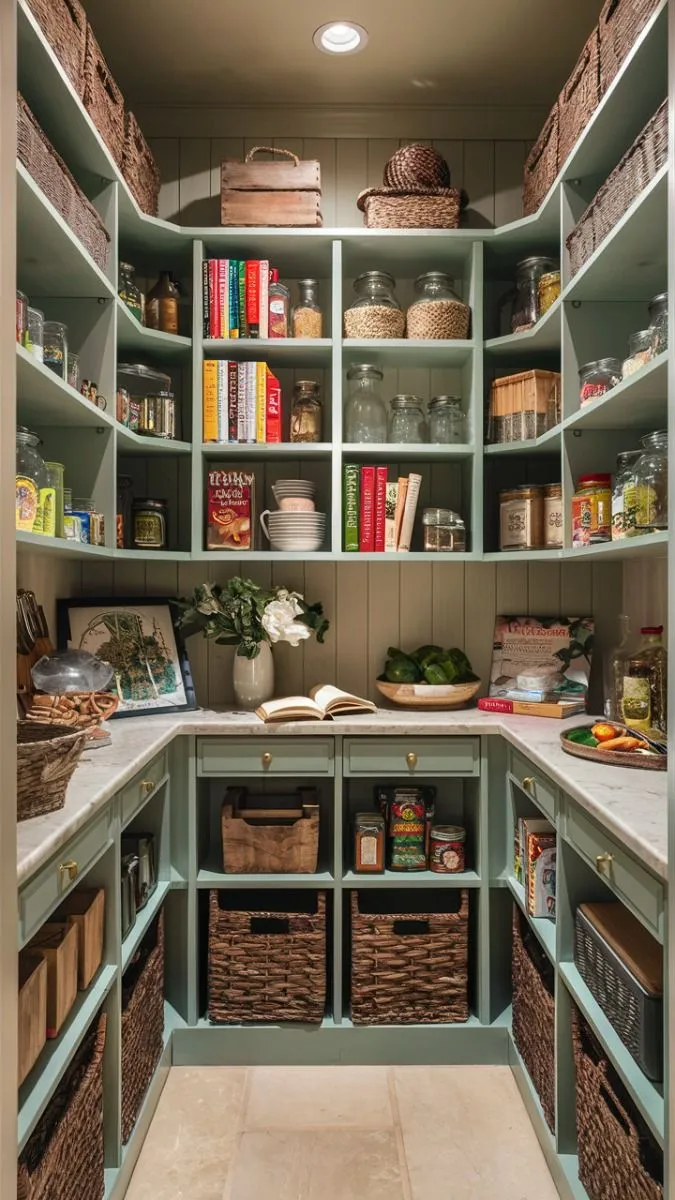
Photo: inn kitchen pantry shelves provisions organised traditional English, via i.pinimg.com
You'll never see it on a room description. It won't appear in any review. But somewhere in every truly excellent inn in Withland, there is a cupboard — or a drawer, or a locked press at the end of a corridor — that tells you everything you need to know about the person running the place.
What's in it? That depends entirely on how long they've been doing this, how many crises they've weathered, and how seriously they take the idea that hospitality is, at its core, the business of solving problems before they're asked.
The Anatomy of Readiness
Start with the basics, because even the basics reveal a philosophy. Every inn has spare toiletries. The question is which ones, and in what quantity, and whether they're the kind that were bought in bulk from a cash-and-carry or the kind that were chosen because a guest once needed exactly that thing at eleven o'clock on a Sunday night and the nearest chemist was twelve miles away.
Withland's more experienced innkeepers tend to have a medical drawer that would embarrass a minor pharmacy. Plasters in several sizes. Antiseptic cream. Antihistamines for the guest who discovers mid-walk that the countryside has opinions about them. Ibuprofen and paracetamol, obviously. But also: blister plasters (a non-negotiable in walking country), a decent pair of tweezers for thorns and splinters, and — in at least one inn on the northern edge of Withland — a small stock of travel sickness tablets, because the winding lanes in that part of the world have a way of surprising people who've driven up from the south.
"The medical kit pays for itself in gratitude," one innkeeper says, somewhat dryly. "But it also pays for itself in repeat bookings. Someone who felt looked after when they were in a bit of trouble doesn't forget that."
The Repair Shelf
Maintenance is the unglamorous backbone of inn life, and the inns that manage it best are the ones that have learned to fix small things before they become expensive things. This requires a specific kind of stockpile.
In practical terms, it means a shelf — or several shelves — carrying the components that break most often in a building full of guests. Light bulbs in every fitting size the property uses, because the moment you run out of the small bayonet ones is the moment three rooms need them simultaneously. Spare door handles, because guests who've had a long day and a couple of glasses of wine are not always gentle with door furniture. Curtain rings. Drawer runners. The specific brand of bathroom sealant that matches what was used three years ago.
One innkeeper in central Withland keeps what she calls her "ten-minute fixes" box: a curated collection of tools and parts that allow her or a member of staff to resolve the most common guest-facing problems — a stiff window, a loose towel rail, a shower head that's lost pressure — without calling anyone, waiting for anyone, or inconveniencing the guest for more than a few minutes.
"The ten-minute box saves us from the hour-long embarrassment," she says. "And it saves the guest from having to pretend they don't mind waiting."
The Emergency Kitchen
Food is where the stockroom philosophy gets most interesting, because kitchens operate on a logic that's simultaneously precise and chaotic. Ingredients are ordered to a menu. The menu is built around what's available. And then a delivery doesn't arrive, or a supplier runs short, or a guest mentions at check-in that they're coeliac and the booking notes somehow didn't capture it.
Withland's most resourceful inn kitchens carry what might be called a shadow larder: a small but carefully chosen stock of provisions that exist specifically to handle the unexpected. Long-life items that can stretch a menu when fresh supplies fall short. A selection of clearly labelled allergen-free alternatives that allow the kitchen to adapt any dish at short notice. A stock of good quality tinned fish, pulses, and preserved vegetables that can become a credible meal on their own if the evening takes an unexpected turn.
The shadow larder is not where the good cooking comes from. But it's what allows the good cooking to keep happening even when the morning's delivery was short on salmon and the game supplier rang to say the venison won't be in until Thursday.
"Guests don't see the shadow larder," one head cook explains. "They just see a kitchen that seems to cope with everything. That's the point."
The Guest Problem Archive
Perhaps the most idiosyncratic item in any well-run Withland inn's hidden infrastructure isn't a physical object at all. It's a record — sometimes a notebook, sometimes a shared digital document — of every unusual guest request or problem the inn has ever encountered, and how it was resolved.
The guest who needed a specific brand of decaffeinated tea that the inn didn't stock. The couple who arrived with a dog that turned out to be considerably larger than described. The solo traveller who locked herself out at two in the morning and needed the spare key that nobody could initially locate. The family whose car wouldn't start on checkout day.
Each of these incidents, in a well-run inn, generates a small operational adjustment. The decaf tea gets added to the standard order. The dog policy gets clarified at booking stage. The spare key system gets reviewed. The name of the nearest breakdown service gets printed and pinned inside the front desk drawer.
Over years, this archive becomes something remarkable: a map of everything that can go wrong, and a set of answers for almost all of it.
The Invisible Standard
None of this is glamorous. None of it photographs well. You won't find the contents of the stockroom room featured in a Sunday supplement piece about beautiful inns, and no travel writer is going to spend three paragraphs on the emergency sewing kit that lives in the desk behind reception (though the guest whose jacket button came off the night before an important meeting might have a different view).
But the stockroom, the shadow larder, the repair shelf, and the problem archive are what separate an inn that feels genuinely looked after from one that feels like it's managing. They're the difference between a host who seems to anticipate your needs and one who seems perpetually surprised by them.
In Withland, the best inns wear this preparedness lightly. You'd never know it was there. Which is, of course, exactly the idea.