Cobbles, Carriages and Quiet Corners: The Second Life of Withland's Inn Yards
Cobbles, Carriages and Quiet Corners: The Second Life of Withland's Inn Yards
Stand in the right spot in a Withland inn yard on a still morning — coffee in hand, the smell of last night's woodsmoke still drifting from somewhere — and it's not hard to let your imagination do the work. The worn cobbles underfoot, the low archway behind you, the way the old stable block frames the sky. This wasn't always a quiet place. For a couple of centuries, it was anything but.
The coaching inn yard was, for its time, something close to an airport terminal. Chaotic, purposeful, constantly moving. Horses were changed, luggage was hauled, passengers climbed stiffly down from rattling carriages and immediately sought warmth, food, and something strong. Grooms shouted. Wheels clattered. The whole operation ran to a schedule that would have impressed a modern logistics firm.
And then, more or less overnight in historical terms, it all stopped.
From Horsepower to Heritage
The arrival of the railways in the mid-nineteenth century didn't just change how Britain travelled — it effectively made the coaching inn yard redundant in a matter of decades. Stables became storage. Archways became awkward. Yards that had once hummed with activity fell quiet, and many were eventually built over, subdivided, or simply forgotten behind the main building.
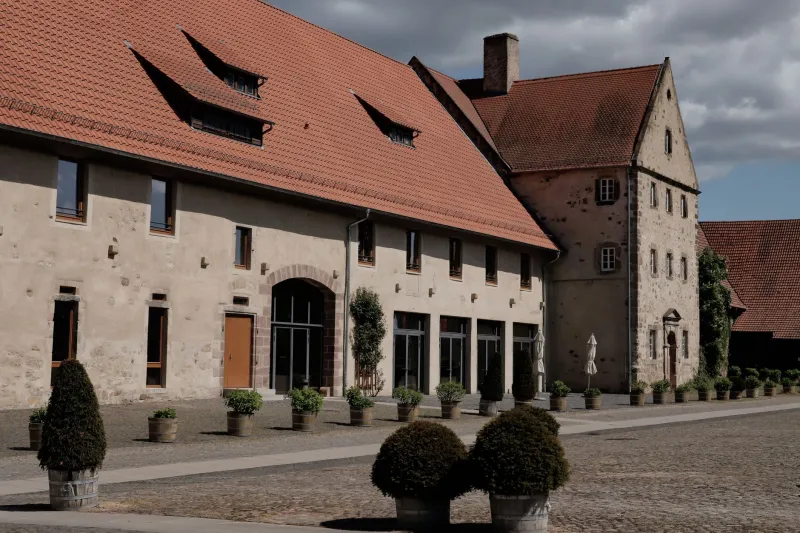
Withland, perhaps because it sat slightly apart from the great railway rush, kept more of its inn yards intact than most corners of England. Walk behind some of the older establishments in the area and you'll find cobbled squares that have barely changed structurally since the seventeen-hundreds. The bones are all there: the low outbuildings, the covered walkways, the old tack room doors with their heavy iron hinges.
What's changed — and rather wonderfully — is what's happening inside them.
Gardens Where Grooms Once Worked
A handful of Withland's more thoughtful innkeepers have spent the last decade or so quietly transforming these neglected spaces into some of the most atmospheric outdoor spots in the region. It's not a loud reinvention. Nobody's installed a cocktail bar or strung up fairy lights in a way that feels forced. The approach is far more considered than that.
Old mounting blocks become the base for climbing roses. Stable doors are left deliberately weathered, their original ironwork polished just enough to show respect without pretending nothing happened in between. Cobbles are kept — always kept — because to lay grass or paving over them would be to lose the whole point. The texture of those stones, uneven and honest, is what makes you feel the history beneath your feet.
Seating tends to be simple: heavy wooden benches, iron chairs, the occasional reclaimed table that looks like it's been sitting there since the coaching days and probably hasn't. In summer, these yards catch the afternoon sun in a way the main garden rarely does, sheltered as they are on three sides. In winter, they become something different again — frost on the cobbles, silence so complete you can hear the rooks in the far field.
Why These Spaces Feel Different
There's a particular quality to time spent in a well-restored inn yard that's genuinely hard to replicate elsewhere. Part of it is the enclosure — that sense of being held within old walls, the outside world reduced to a rectangle of sky above. Part of it is the material honesty of the place. Stone, wood, iron. Nothing that pretends to be something it isn't.
But there's also something more psychological at work. These spaces have a layered quality that newer hospitality environments simply can't manufacture. Every scuff on a doorframe, every uneven course of brickwork, every shadow cast by an archway that's stood for two hundred years — it all contributes to an atmosphere that puts modern guests in a very particular frame of mind. Slower. More present. Less inclined to check their phones.
Guests who've discovered the inn yard at quieter moments — early morning, or just after supper when the light is going — often describe it as the highlight of a stay. Not the room, not the meal, but twenty minutes sitting on a cold bench in a cobbled square, watching the swallows.
What Innkeepers Are Getting Right
The best restorations in Withland share a common instinct: restraint. The temptation to over-programme these spaces — to turn them into outdoor dining venues or event spaces — has, for the most part, been resisted. Instead, the yard is offered to guests as it is. Somewhere to sit. Somewhere to be.
Some innkeepers have added very specific touches that feel earned rather than decorative. A wall-mounted herb garden where the old feed store once stood. A single apple tree, gnarled and ancient, that predates the current building. A handwritten notice, tacked to a stable door, explaining what the yard was once used for — not as a museum exhibit, but as a genuine piece of context for curious guests.
The most affecting yards are the ones where you can feel the innkeeper's attachment to the history without it being shoved at you. Where the restoration has been done slowly, over years, with the same care that the original builders brought to the stonework.
A Corner Worth Seeking Out
If you're planning a stay in Withland — or already have one booked — do yourself a favour and ask about the yard. Not every inn has one, and not every yard has been given the attention it deserves. But when you find the right one, on the right morning, with the right weather and the right level of quiet, it's one of those travel moments that stays with you.
Britain has a habit of accidentally preserving its best things in the places nobody thinks to look. The coaching inn yard is exactly that kind of accidental treasure — abandoned just long enough to survive, and now, in Withland at least, finally being appreciated for what it always was.
The beating heart of British travel, gone quiet. And all the better for it.