The Death of the Real Beer Garden
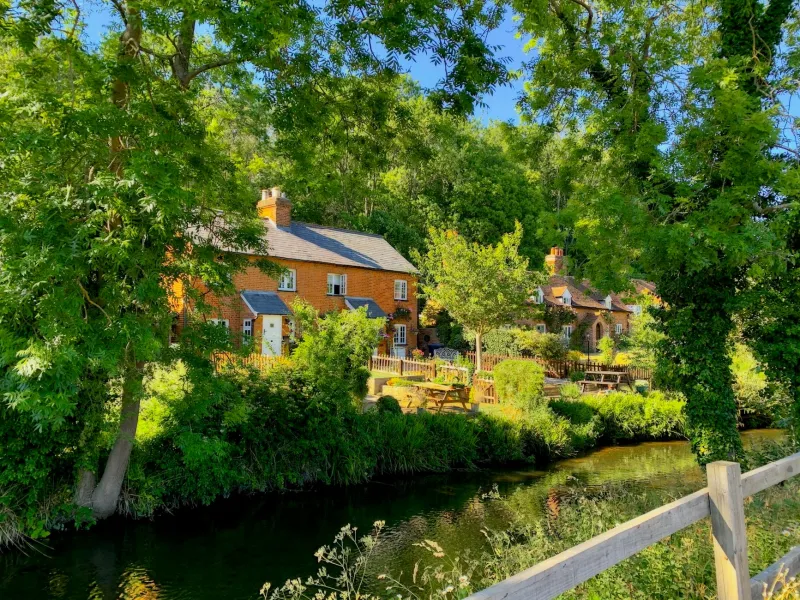
Somewhere between the rise of gastropubs and the fall of proper pub culture, Britain lost something precious: the art of the inn garden. Not the AstroTurf-carpeted afterthoughts bolted onto city boozers, nor the wind-whipped rooftop terraces where you need a mortgage to buy a round. We're talking about those magical outdoor spaces where honeysuckle climbs ancient brick walls and the only soundtrack is the gentle murmur of conversation drifting between lavender bushes.
Withland's innkeepers, it seems, never got the memo about modernisation. Thank goodness.
More Than Just Tables and Parasols
Step through the back door of The Crown & Anchor on a July evening, and you'll understand immediately what we've been missing. This isn't an outdoor drinking area—it's a living room that happens to be under open sky. Cottage roses tumble over weathered stone walls, their perfume mingling with the scent of rosemary and thyme from the kitchen garden that guests are actively encouraged to raid for their gin and tonics.
"People think a beer garden is just somewhere to stick smokers," laughs Sarah Mitchell, whose family has run the inn for three generations. "But a proper garden is where the magic happens. It's where strangers become friends, where business deals get done over a pint of bitter, where proposals happen under the apple tree."
The apple tree in question—a gnarled old Bramley that's been dropping fruit into pints for the better part of a century—stands testament to the patience that defines Withland's approach to hospitality. This is gardening on geological time scales, where decisions made by great-grandparents are still bearing fruit, quite literally.
The Philosophy of Proper Outdoor Space
At The Red Lion, they've taken the concept even further. The garden here isn't just cultivated—it's curated. Head gardener and part-time barman Tom Hartwell has created what he calls "drinking rooms" throughout the sprawling back garden: intimate seating areas carved out between established shrubs, each with its own character and microclimate.
"City bars think big is better," Tom explains, deadheading roses with one hand while pulling pints with the other. "Pack in as many tables as possible, maximise the covers. But we're after something different—we want people to linger, to settle in for the afternoon, to forget they've got anywhere else to be."
The result is magical. Couples disappear into the fernery for intimate conversations. Families spread out under the cherry tree, children building dens from fallen branches while parents nurse pints of locally-brewed ale. Dog walkers find themselves staying for three pints instead of one, their faithful companions sprawled contentedly in the shade of the old oak.
Gardens That Give Back
But perhaps the most revolutionary aspect of Withland's inn gardens is how they blur the line between ornamental and productive. At The George, the herb spiral provides fresh garnishes for cocktails and seasonings for the kitchen. Guests are handed small scissors with their drinks and invited to customise their experience—mint for the mojitos, rosemary for the gin, borage flowers for the Pimm's.
"It connects people to what they're drinking," explains head chef Emma Rodriguez. "When you've picked your own mint, you taste it differently. You're not just consuming—you're participating."
The concept extends to the vegetable beds too. The summer menu changes not just seasonally but daily, based on what's ready in the garden. Yesterday's special might feature courgette flowers stuffed with local cheese; tomorrow's could showcase the first broad beans of the season. It's farm-to-table dining where the farm is twenty yards from your table.
The Antidote to Anonymous
In an age of identical chain pubs and soulless beer gardens, Withland's inn gardens offer something increasingly rare: genuine character. Each space tells the story of its place—the maritime influences visible in The Harbour Inn's salt-tolerant plants, the agricultural heritage celebrated in The Ploughman's working vegetable plots, the Victorian grandeur preserved in The Manor House's formal parterre.
"You can't fake this stuff," says garden designer and pub regular James Crawford, gesturing toward a magnificent wisteria that's been trained across The Swan's entire back wall over the past forty years. "These gardens have soul because they've been loved, tended, argued over, celebrated in. They're not designed—they've evolved."
The Summer Revolution
As Britain's weather becomes increasingly unpredictable and our lives increasingly digital, Withland's inn gardens offer a double refuge. They're spaces designed for the English summer at its most glorious—those perfect July evenings when the light seems to last forever and the air carries the scent of new-mown hay. But they're also sanctuaries from the constant ping of notifications, zones where conversation flows as freely as the locally-brewed ale.
"People arrive tense, checking their phones every five minutes," observes Sarah Mitchell. "But something about the garden changes them. Maybe it's the bees in the lavender, maybe it's the sound of children laughing, maybe it's just the simple pleasure of sitting under a tree with a proper pint. Whatever it is, they leave different."
The Future is Rooted in the Past
As summer arrives in Withland, these garden sanctuaries are coming into their own once again. The climbing roses are unfurling their first blooms, the herb beds are thick with promise, and the ancient fruit trees are heavy with developing bounty. It's a reminder that the best innovations often involve looking backwards—to a time when outdoor drinking meant more than plastic furniture on concrete, when gardens were grown rather than installed, when the pace of life moved to the rhythm of the seasons rather than the tyranny of the notification.
In Withland's inn gardens, that older, gentler rhythm still holds sway. And in a world that's forgotten how to slow down, that might just be the most revolutionary thing of all.