Between the Lines: How Inn Bookshelves Became Withland's Best-Kept Literary Secret
The Accidental Curators
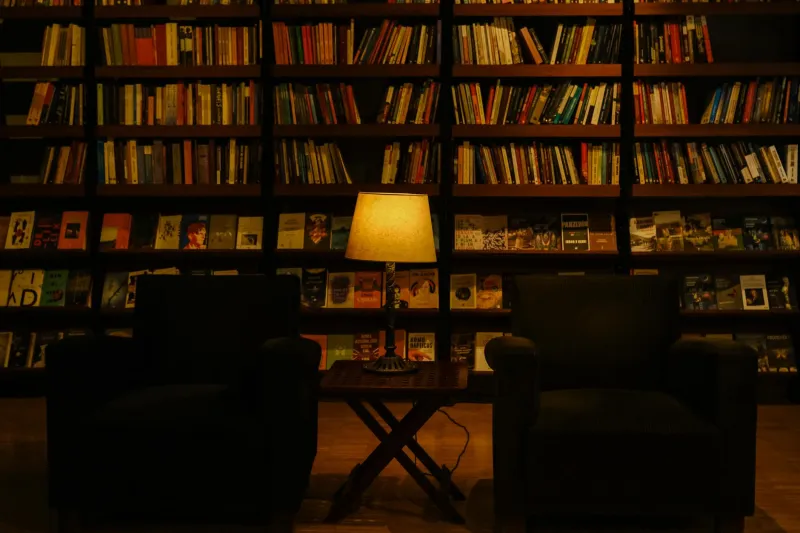
In an era when Waterstones struggles and independent bookshops close with depressing regularity, an unlikely literary renaissance is taking place in the lounges and snugs of Withland's traditional inns. Here, amongst the horse brasses and hunting prints, some of Britain's most fascinating libraries have evolved organically – not through careful curation, but through the beautiful chaos of guests who arrive with books and leave with different ones.
These aren't your typical hotel offerings of abandoned Dan Brown novels and water-damaged travel guides. The bookshelves of Withland's finest establishments tell stories within stories, each spine representing not just its author's narrative, but the journey of the traveller who left it behind.
The Archaeology of Abandoned Reading
Peer closely at any well-established inn bookshelf and you'll discover layers of literary sediment that reveal decades of changing tastes and travelling habits. The faded Agatha Christie paperbacks from the 1980s sit alongside more recent psychological thrillers, whilst dog-eared Ordnance Survey maps from forgotten walking holidays nestle between contemporary food memoirs and the occasional philosophical treatise that someone clearly thought too weighty for the journey home.
At The Wheatsheaf in Lower Withland, landlord James Morrison has been watching this literary ecosystem evolve for nearly three decades. "You can chart social history through what people leave behind," he observes, running his finger along a shelf that ranges from Jeffrey Archer to Sally Rooney with stops at Bill Bryson and Nigel Slater along the way. "The pandemic years brought us a lot more poetry and gardening books. Brexit seemed to coincide with a surge in historical fiction, as if people were seeking comfort in other people's past troubles."
 Photo: The Wheatsheaf, via uklandinvestors.com
The Psychology of the Inn Exchange
There's something uniquely liberating about the inn book exchange that distinguishes it from the rigid systems of public libraries or the commercial imperatives of bookshops. Here, recommendation happens through serendipity rather than algorithm. The thriller you pick up might have been chosen by a fellow guest whose taste you'll never know, but whose margin notes suggest they found the same passages gripping.
This anonymous intimacy creates a peculiar form of literary community. Regulars at The Griffin often report returning to find books they'd forgotten they'd left, now bearing evidence of other readers – a receipt marking a different page, a coffee ring on the back cover, sometimes even a handwritten note tucked between pages expressing gratitude for a particularly good recommendation.
The Innkeeper as Literary Matchmaker
The most successful inn libraries don't simply accumulate books; they're actively managed by landlords who understand the art of literary hospitality. Sarah Chen at The Rose & Crown has developed an almost supernatural ability to match guests with exactly the right book for their stay. "It's partly about reading people," she explains, "but also about understanding what different times of year call for. Nobody wants Scandinavian noir in December, but it's perfect for those bright June evenings when you want something with a bit of edge."
 Photo: The Rose & Crown, via s-media-cache-ak0.pinimg.com
Her system involves subtle observation and gentle intervention. The stressed executive checking in on Friday night might find a copy of 'The Salt Path' casually positioned on their bedside table. The young couple celebrating an anniversary could discover a collection of love poetry had somehow migrated to their window seat. It's hospitality that extends beyond comfortable beds and good food into the realm of emotional nourishment.
The Local History Treasures
Perhaps the most valuable volumes in these collections are the local history books – often self-published memoirs, parish chronicles, or walking guides compiled by enthusiastic residents. These would be impossible to find in commercial bookshops, yet they offer insights into Withland's character that no professional travel writer could capture.
The Black Swan keeps a dedicated section of such volumes, many donated by local authors or inherited from long-term guests who've become part of the inn's extended family. Here you might discover the story of the Victorian vicar who catalogued every wildflower in the surrounding countryside, or the wartime diary of a Land Girl who worked the local farms. These books don't just inform; they connect visitors to the deeper narrative of the place they're temporarily inhabiting.
 Photo: The Black Swan, via static.wixstatic.com
The Digital Resistance
In our screen-saturated age, the physical book collection represents something quietly radical. These inns have become sanctuaries for the kind of deep reading that's increasingly difficult to sustain at home, where notifications compete for attention and the temptation to multitask proves overwhelming.
"People rediscover the pleasure of single-tasking here," notes Tom Bradley, whose family has run The Crown for four generations. "They'll come down to breakfast talking about staying up too late because they couldn't put down whatever they'd found on our shelves. That's exactly the kind of problem we want to create."
The physical nature of these collections also encourages browsing in ways that digital platforms, for all their sophisticated algorithms, cannot replicate. The happy accident of discovering an author you've never heard of, or stumbling across a subject that wouldn't normally interest you, becomes part of the inn experience.
The Economics of Literary Hospitality
Whilst difficult to quantify, the presence of a thoughtfully maintained book collection clearly influences guest satisfaction and return visits. In an age where accommodation can feel increasingly commoditised, these literary touches provide genuine differentiation. They suggest an establishment that cares about the quality of guests' time, not just the comfort of their beds.
Several Withland innkeepers report that their book collections feature prominently in online reviews and word-of-mouth recommendations. The library becomes part of the inn's identity, as distinctive as its food or décor. Some establishments have even started organising informal book clubs or author readings, recognising that literary-minded guests represent a particularly loyal demographic.
The Future of Inn Libraries
As high street retail continues to struggle, these inn collections are evolving beyond simple exchanges. Some are partnering with local authors for small launch events, others are developing relationships with independent publishers to feature regional writing. A few have started cataloguing their collections, not for lending purposes, but to help guests navigate the treasures available.
The most forward-thinking establishments are recognising that their book collections represent cultural assets worthy of active development. They're seeking donations of quality titles, retiring the truly battered volumes, and ensuring their shelves reflect both contemporary tastes and timeless classics.
Reading Between the Lines
Ultimately, these inn libraries succeed because they operate on principles that commercial bookselling has largely abandoned: patience, serendipity, and trust in readers' ability to discover what they need. They remind us that the best recommendations often come not from algorithms or professional critics, but from the accumulated wisdom of fellow travellers who've walked similar paths.
In Withland's inns, every bookshelf tells multiple stories – not just those written by published authors, but the ongoing narrative of guests who've found exactly what they didn't know they were looking for. In an increasingly connected yet fragmented world, these accidental libraries offer something precious: proof that strangers can still surprise each other with exactly the right book at exactly the right moment.